
Your product is good.
The market just can't tell yet.
No marketing hire yet, so it lands on you at 11pm, after the product work. I've been on both sides of that: I wrote backend systems before I wrote positioning.
30 minutes, on me. Bring your analytics if you want a real answer.
See how this went for a client
Currently booking
Founder engagements - Q3 & Q4 2026
- Where founders usually are
Four problems I get called about.
Yours is probably one of them.
01 / 04
The market doesn't get it yet
Your demo lands with engineers and stalls with everyone else. That is usually a positioning problem rather than a product one: the pitch describes what the thing does, instead of what it takes off someone's plate. Fixing it starts with the words, not the funnel.
02 / 04
Engineers built it. Nobody converts on it.
The site is fast, the code is clean, and the signup rate is still bad. Conversion is not a design preference. It is a sequence of things a visitor has to believe before they act, and one of them is missing. I can read the code and the analytics, so I can tell you which.
03 / 04
Launch day keeps moving
You have a date, a changelog, and no story. A launch is not an announcement, it is a set of assets, sequences and sales answers that need to exist before the date arrives. Most of the work sits in the four weeks nobody plans for.
04 / 04
Search is changing under you
Technical SEO used to mean crawlability and title tags. Now the same groundwork decides whether an AI answer cites you or cites a competitor. Both come down to one question: can a machine read your site, and does it trust what it finds.
- What I actually do
Seven lines of work.
All of them mine.
Most engagements use two or three of these, not all seven. I run them myself, so what you see in the plan is what gets built.
Positioning and messaging
For products whose value is obvious to you and invisible to everyone else.
Product launch and go-to-market
The assets, sequences and sales answers that have to exist before the date.
Technical SEO and AI search visibility
Site architecture and content a crawler can read and an AI answer will cite.
Product and landing pages
Conversion-focused builds, scoped as projects with milestones, never folded into a retainer.
Lifecycle and product-led email
Onboarding, activation and winback flows, built CASL-compliant from the start.
Paid acquisition
LinkedIn and Google, judged on pipeline rather than impressions.
Measurement and attribution
Knowing which channel actually did the work, and being able to prove it.
- How an engagement runs
No onboarding deck.
Read access and a written diagnosis.
01
Week one
I get read access
Analytics, Search Console, your CRM, and the repo or CMS if you'll have me. I would rather look at the data than be told about it.
02
Week two
You get the diagnosis in writing
What's working, what's leaking, and what to ignore. In a document you can forward, not a call you have to take notes in.
03
Weeks three and four
We agree a 90-day plan
Sequenced, with what each piece depends on and what it should move. You sign off before anything runs.
04
Then
I build
Async by default, with a standing call at whatever cadence suits you. I write the documentation as I go, so your team can run it after the engagement ends.

- Where the technical half comes from
Fifteen years,
both sides of the table.
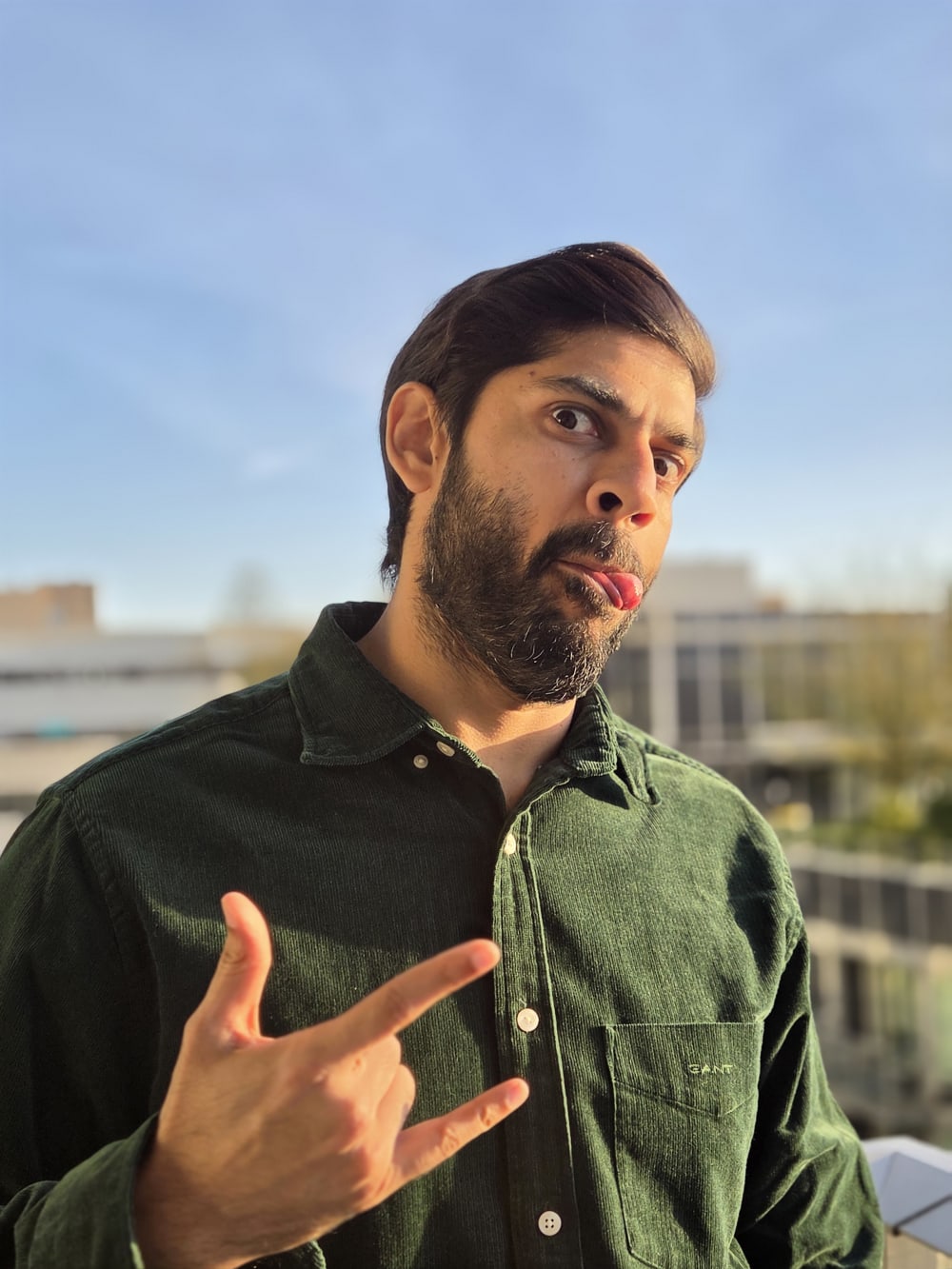
I started as a software developer. Analyst Developer at Goldman Sachs building backend financial systems, then Senior Software Developer at Amazon. I moved into product marketing at Flipkart, and then Google, where I handled 100+ SMB partners and generated $18M+ in annual revenue for them.
Two of those Google launches are the reason I think I'm useful to a technical founder.
On the first, a programmatic advertising product had stalled across 15+ markets, everywhere outside the Americas. The blocker turned out not to be features. Partners liked the product and did not trust the payment and reporting operations sitting behind it. So the work was a positioning rebuild, and then getting Finance, Customer Success and Product to change the operations underneath the promise, because a positioning claim nobody can deliver on is just a louder version of the same problem.
On the second, I audited news publishers' apps and found the revenue barrier was app infrastructure rather than ad demand: latency, unoptimised ad fetching, poor caching patterns. That diagnosis was only available to someone who could read the stack. It became a technical enablement programme, with self-serve developer toolkits and a train-the-trainer certification so regional teams could run it without me.
31
Brands grown
$4.2M
Ad spend managed
Always
Founder-to-Founder
Earned in-house during the roles above, not as studio client work. The client work is further down.
- One client, in full
Cascadia Tech,
13 months.
Cascadia Tech builds custom hardware and software for the machine lathe industry. Seven to ten people, bootstrapped, in a niche narrow enough that generic marketing advice is worse than none at all.
They came to me with a retention problem. They had pivoted to a new technology stack and existing customers were leaving. We stopped that first. Then we reworked the positioning and messaging, built the campaign structure and the outreach, set up the email workflow, and wrote the staff training documentation so their team could run it without me.
The engagement ran 13 months across 2024 and 2025.
67
fully qualified leads in the first quarter
Weekly syncs, written recaps, no missed deadlines. We've worked with the big agencies, but this is the first time I've felt like we had a senior marketer in the room, not a project manager.
- From the Journal
Written for founders,
not for search engines.
One client case study is a thin thing to judge someone on. These are the other half: what I actually think about positioning, conversion and AI search, at length, for free.
Conversion
What Makes a SaaS Trial Signup Page Actually Convert
The sequence of things a visitor has to believe before they hand over an email.
Getting started
B2B SaaS Startup? Run a Marketing Audit First
What to look at before spending anything, and the order to look at it in.
Measurement
Google's AI Search Report: What It Shows, What It Hides
The new reporting answers less than it looks like it does. What it leaves out.
AI search
How AI Search Is Changing SEO for Canadian Businesses
What changes when an answer engine sits between your site and a buyer.
Positioning
Why Vancouver Tech Startups Need a Human-First Brand
Every competitor sounds like a platform. That is the opening.
- Before you book
Things founders ask me
before they ask about price.
Do you actually write code?
Not for clients. I read it. I'll go through your repo, your analytics setup and your tag manager and tell you what's wrong, and I'll write the spec your engineers need. What I won't do is take a ticket in your sprint.
Is it just you?
Yes, and that's the trade. You get someone senior on the account every week, rather than a strategist at the pitch and a coordinator afterwards. It also means I take a small number of clients at a time, and I'm not on Slack all day.
How does this work if we have no marketing team?
Async by default. Written diagnoses, written plans, and a standing call at whatever cadence suits you. I write documentation as I go, so what I build does not leave with me.
We're pre-revenue. Can you help?
Usually not well, and I'd rather say so. Marketing compounds slowly, and a retainer is an expensive way to spend pre-revenue runway. If you're still looking for product-market fit, you need conversations with users more than you need me.
Where are you based?
Vancouver, working across Canada and remote-friendly. Everything is quoted in CAD.
How do contracts work?
Monthly. No annual contracts, ever. Website and product page builds are scoped as projects with milestones, never folded into a retainer.
- Get in touch
Tell me what's not working.
I'll reply like a human.
Send a note below or grab time on the calendar. Either way, you'll hear from Mayank: not a sales rep, not a chatbot.