

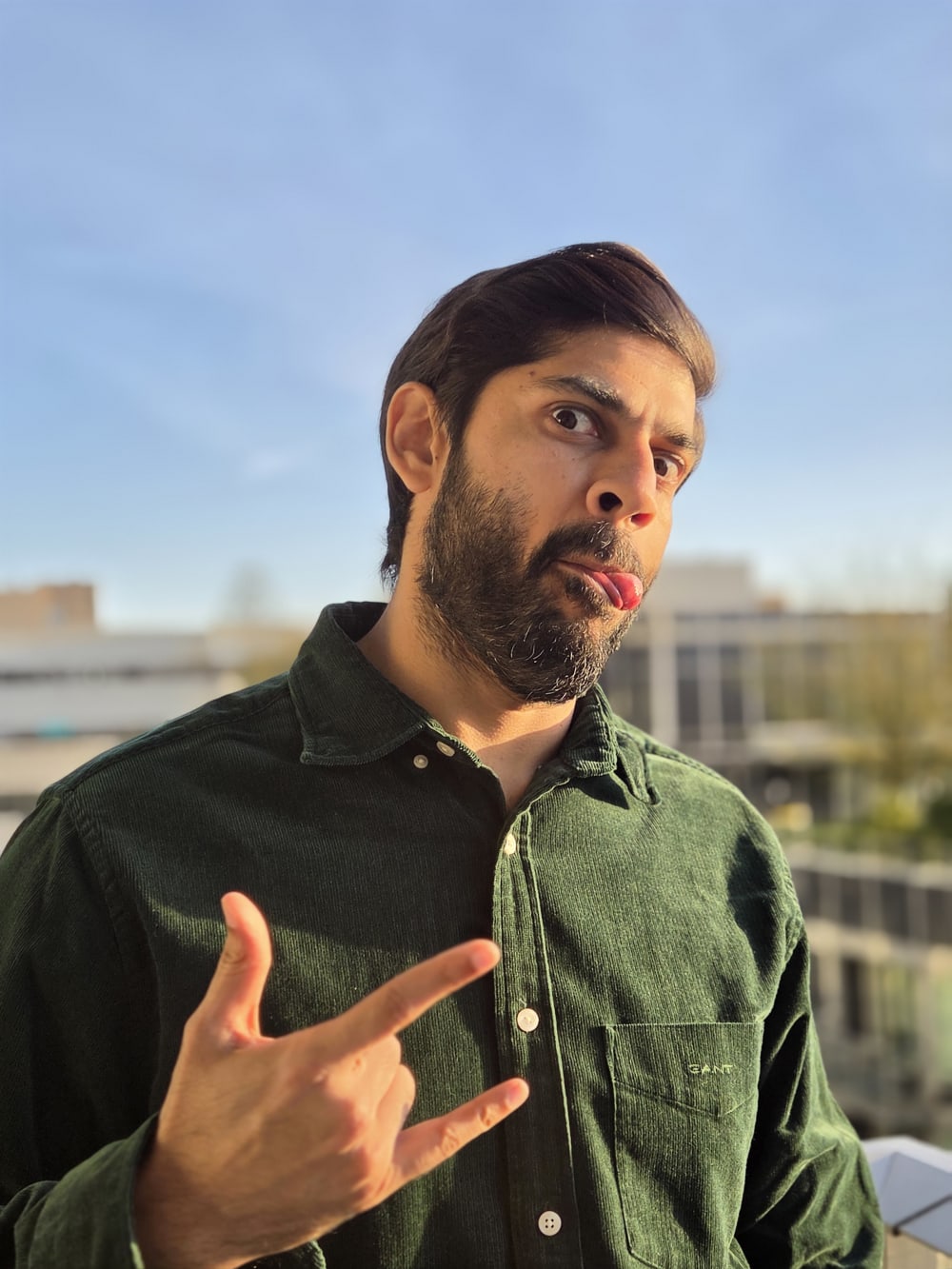
I wrote backend financial systems and pricing services before I wrote a line of positioning, and I never fully stopped reading code. That is the reason this page is separate from the other one.
15+ years,
both sides of the table.
I started as a software developer. Analyst Developer at Goldman Sachs, building backend financial systems and enterprise pricing models, then Senior Software Developer at Amazon, on secure pricing systems and checkout flows. That second one is where the question started. I was watching engineering decisions ripple out through millions of customer journeys, and I wanted to know why people chose the thing, and what made them stay.
That question moved me across: Marketing Solutions Lead at Flipkart, then Senior Product Marketing Manager at Google, then Head of Product Marketing at Maruichi Kuma. At Google I handled 100+ SMB partners and generated $18M+ in annual revenue for them, which is the figure I lead with because it was earned the way this studio works: a small number of accounts at a time, known individually, over a long time.
What I found in the crossing is that most marketers cannot read a stack and most engineers cannot write a headline, and technical products get misunderstood in the space between. I did an MBA in marketing and strategy with a data analytics minor, largely to close the last gaps on the second half of that. I have consulted independently since, and mayans.STUDIO is that practice under a name.
I also sit on the board of the Friends of the Vancouver Public Library, running marketing and community engagement, where I grew the donor pipeline by 15 percent. Helping people find the right information at the right moment turns out to be most of the job here too.
- Where the technical half comes from
The two biggest launches
this all rests on.
A programmatic advertising product had stalled everywhere outside the Americas, across 15+ markets. The assumption inside the building was that it needed more features.
It did not. Partners liked the product. What they did not trust was the payment and reporting operations sitting behind it, and no amount of messaging fixes a promise the operations cannot keep. So the work was two things at once: a positioning rebuild, from what the product did to the job the partner was actually hiring it for, and then getting Finance, Customer Success and Product to change the operations underneath the new promise.
That is the part I would want a founder to take from it. A positioning claim nobody can deliver on is just a louder version of the same problem.
The second was an audit of news publishers' apps, where the received wisdom was that the revenue problem was ad demand. It was not. It was app infrastructure: latency, unoptimised ad fetching, poor caching patterns. That diagnosis was only available to someone who could read the stack, and it is the single most useful thing I brought to it.
It became a technical enablement programme, with self-serve developer toolkits and a train-the-trainer certification so regional teams could run it without me. Building the thing that outlives your own involvement is a habit from that programme, and it is why documentation is part of every engagement here rather than a deliverable at the end.
- One client, in full
Cascadia Tech,
13 months.
Cascadia Tech builds custom hardware and software for the machine lathe industry. Seven to ten people, bootstrapped, in a niche narrow enough that generic marketing advice is worse than none at all. They are the only tech client whose work I can show you, and I would rather say that plainly than imply a roster.
They did not come to me with a growth problem. They came with a retention problem. They had pivoted to a new technology stack and existing customers were leaving, and there is no sense pouring acquisition into a bucket in that state, so we stopped that first.
Once retention was stable the work widened into what it should have been from the start: repositioning and messaging for the new stack, the campaign structure and outreach underneath it, the email workflow, and the staff training documentation so their own team could run all of it. The strategy was built around one acquisition goal they had set themselves, and it met it.
The engagement ran 13 months across 2024 and 2025.
67
fully qualified leads in the first quarter
The figures further up this page were earned in-house at Google. This one is client work.
- Ready when you are
Thirty minutes, no decks. Bring the problem, a symptom or your analytics, and you will leave with a sharper next step that you can start implementing.